Online Shopping Scams

Don't let a good deal fool you.

Whether you're making everyday purchases or shopping for the holidays, take a moment before you click, pay or share personal information.

Shop Smart. Celebrate Safely.

The holidays bring more online shopping, more packages at the door and plenty of tempting deals. They also give scammers opportunities to blend fraudulent websites, marketplace listings and delivery messages into the holiday rush.

Before you buy, click or respond, pause and verify.


Fake Shopping Websites

 
A website can look polished and still be fraudulent. Scammers can use legitimate-looking product photos, logos and advertisements to make fake stores appear convincing. Some fake sellers take your payment and send an inferior or counterfeit product, while others send nothing at all.
 
Watch for: 
  • Prices dramatically lower than other retailers
  • An unfamiliar retailer with little information or history
  • Poorly written or unclear return and refund policies
  • Pressure to make a purchase quickly
  • Requests for unusual forms of payment
 
Shop safer:  
If you don't recognize the retailer, research it before buying. The Federal Trade Commission recommends searching the seller's name and website along with terms such as "review," "complaint" or "scam."

Social Media Marketplace Scams

 
That perfect gift might appear while you're scrolling through social media or browsing an online marketplace. But remember: seeing an item advertised on a familiar platform doesn't automatically mean the seller is trustworthy.
 
Red flags include: 
  • A highly desirable item at an unusually low price
  • A new seller or profile with little history
  • Pressure to pay or communicate outside the marketplace
  • Requests for payment methods that offer little protection
  • A seller whose information doesn't match the payment recipient
Beware of sellers requesting payment through methods without buyer protections.

Package Delivery Scams


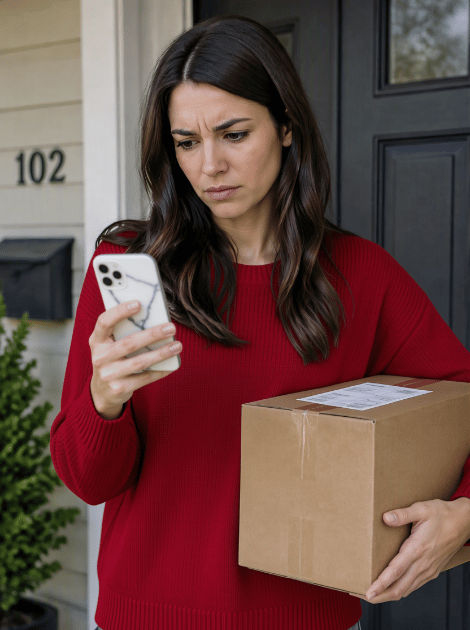
During the holidays, receiving a text about a delayed package may not seem unusual, especially when you're waiting for several orders.

That's what can make these scams effective.

A fraudulent message may say:

  • Your package couldn't be delivered.
  • Your address needs to be updated.
  • A small delivery fee is required.
  • Your package is being held.
  • You need to click a link to reschedule delivery.
Before you click: 
 
Stop and verify the message another way. Don't use the link in an unexpected text or email. Instead, open the retailer's or carrier's official website or app yourself and check the tracking number associated with your actual order. The Federal Communications Commission specifically recommends checking tracking numbers and contacting the retailer or shipping company directly if you think there may be a problem.


Take 5 Before You Buy

1. Check the seller.
Do you recognize and trust them?

2. Check the deal.
Does the price seem too good to be true?

3. Check the website.
Did you arrive there through an unexpected ad or link?

4. Check the payment method.
Be cautious when a seller demands gift cards, transfers or cryptocurrency. The Federal Trade Commission identifies these demands as a significant scam warning sign.

5. Trust your instincts.
If something doesn't feel right, don't rush. Leave the site and investigate first.


Think You've Been Scammed?

If you provided financial information to a scammer or notice a suspicious transaction on your account, contact us promptly.

Holiday shopping can move quickly. Your decisions don't have to.

Pause. Verify. Then shop.

We're here to help protect you and your financial life, because that's part of Doing Life Together.


Contact Us


Learn more about other types of fraud.