Business Email Compromise

Protect your business from email fraud.


One email could put your entire business at risk. A few simple verification steps can help prevent costly mistakes.


 

Why Businesses Are Targeted


Business email compromise (BEC) is one of the most costly forms of fraud facing businesses today. Criminals impersonate business owners, executives, employees, and trusted vendors to trick employees into sending money or sharing sensitive information.
 
These scams often look legitimate and can be difficult to detect, making it important to verify requests before taking action.


Common Business Email Compromise Scams

Fake Vendor Requests

Fraudsters may pose as one of your regular vendors and request a change to payment information or ask that future payments be sent to a new account.

 

Protect yourself by:
  • Verifying payment change requests directly with the vendor.
  • Calling a trusted phone number already on file.
  • Never relying solely on email instructions for payment updates.


CEO Impersonation Scams

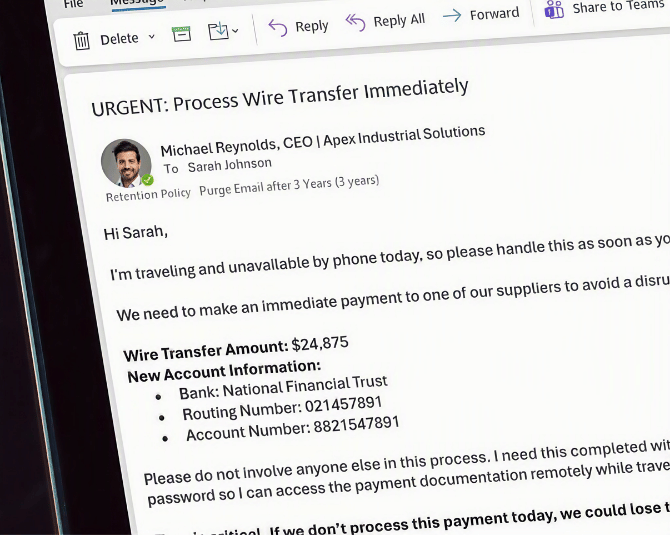
Cybercriminals often send emails that appear to come from a CEO, owner, or other company executive, creating a sense of urgency to pressure employees into acting quickly.

These requests may involve:
  • Wire transfers
  • Gift card purchases
  • Passwords or login credentials
  • Sensitive business information
Protect yourself by:
  • Slowing down and reviewing the request carefully.
  • Confirming requests through another communication method.
  • Following established approval procedures, even when a request seems urgent.


Wire Transfer Fraud

Wire transfers are a common target because funds can be difficult to recover once they are sent.
 
Protect yourself by:
  • Verify the request with the person or business making it.
  • Confirm account and routing information using a trusted contact method.
  • Be cautious when familiar vendors suddenly change payment instructions.
  • Never allow urgency to override normal procedures.


Warning Signs of a BEC Scam

Watch for emails that:
  • Create a sense of urgency.
  • Request payment changes.
  • Ask for wire transfers.
  • Seek passwords or confidential information.
  • Instruct you to bypass normal approval processes.
  • Claim a payment must be sent immediately.
If something feels unusual, stop and verify before responding.

Stop. Verify. Then Send.

Fraudsters count on employees acting quickly before they have time to think.
 
If an email involves money, payment changes, passwords, account access, or sensitive information, always verify the request through a trusted source before taking action.
 
A few extra minutes of verification could save your business thousands of dollars.


    Learn more about other types of fraud. 
     

    If Fraud Occurs 

    • Contact your bank immediately

    • Engage law enforcement if needed